July 12th
Professor Larry Marschall
Spoke on the
Supernova at the End of the Universe: How
Astronomers Discovered Dark Energy at the July
meeting. Professor Marschall is a member of the
Department of Physics of Gettysburg College. The story:
The 2011 Nobel Prize in Physics was awarded to three
young astronomers who, a decade ago, discovered a very
peculiar and unexpected thing about the universe. Not only
is it expanding---a fact known for three quarters of a
century---but it is expanding at an increasing pace. Gravity
pulls things together and slows down the expansion, so this
discovery was startling---it implied a previously unknown
cosmic force of repulsion that came to be known as "Dark
Energy". His talk recounted how astronomers
discovered the acceleration of the universe and the presence
of dark energy by studying exploding stars called
supernovas, and will reveal what we have learned about
dark energy over the succeeding years.
Dr. Marschall is the author of two new books on astronomy:
Galileo’s New Universe and Pluto Confidential. He teaches
courses in astronomy, physics, and science writing at
Gettysburg College.

April 5th, 2012
Mike T. Renzi
"Understanding the impact of light pollution featuring the documentary 'The City Dark'"
This is a feature documentary about light pollution and the disappearing night sky. It premiered in competition at the 2011 South by Southwest Film Festival, where it won the Jury Prize for Best Score/Music. After moving to light-polluted New York City from rural Maine, filmmaker Ian Cheney asks: “Do we need the dark?” Exploring the threat of killer asteroids in Hawai’i, tracking hatching turtles along the Florida coast, and rescuing injured birds on Chicago streets, Cheney unravels the myriad implications of a globe glittering with lights

March 1st 2012
Michael Farber, JD
“The Pilgrims--Men and Women of Science and of the Enlightenment"
After more than four years of research piggy-backing on the works of Morse Payne, Historian Farber has found that Winslow and Bradford were truly men of science as they put as much faith in the use of reason when leading the Plymouth Colony as they did in the hands of God. They used their science as surveyors to lay out the towns of Cape Cod layiing claim before the Puritans could get here. Facinating subject.

January 5th
Rick Paulus and Julie Guibord
“Discovering Planet Earth: HIKING
“Discovering Planet Earth: HIKING THE PACIFIC CREST TRAIL”
This was a rare opportunity for society members to follow a 2,650 mile virtual hike retracing the steps of Julie Guibord and Rick Paulus along the Pacific Crest Trail. Julie and Rick began their long walk through the wilderness at the U.S. - Mexico border in early May and after four months, six climatic regions and countless mountain ascents, finished their trek up the U.S. western most mountain range. Their adventure they admit was not for the faint of heart, with a requirement of pushing more than 20 miles per day in rough terrain in order to complete the trail before autumn. This challenge is an attraction for most people half their age, many whom they would lap or be re-lapped often as they had to go off trail for provisions which they would prepare and mail ahead general delivery. In a celestial connection, one notable young hiker was named ‘Comet’ who they frequently encountered. They admit that even “cowboy camping” under the stars left them little time for observing due to exhaustion and need for sleep. Meanwhile, cloud cover often left them with close out observing. Rick chuckled that because they were camped in a narrow canyon on a clear night during the Perseids, they caught only a small piece of the action.
This was no easy hike, in fact at times almost brutal, where a misstep on a rocky trail might mean a wrenched knee or twisted ankle, and where fording rushing streams and looking for dry ground while bivouacking in the Sierras and northward were required along the crest trail. The couple frequently ran low on drinking water as hikers count on replenishing at “rail angel” stops (places where volunteers stash water during the season). At one point in a high hot desert they reached one of these stops and all the water was gone! They were forced to recycle the only putrid water they could find in 50 miles. Their images taken along the Pacific Coast Trail and its many wonders of geologic formations were breathtaking as they described in detail how they cleared challenging peaks and ridges and ventured switchback trails.
By late August they reached into Washington State and faced a month of rain and chilly nights as they rushed along to the Canadian border trying to beat the first snows. This was one of the most interesting talks on the extremes of planet earth, and planning and managing a challenge to succeed that we have heard, and told in perfect agreement by soul mates.
Rick Paulus is an avid kayaker, cyclist and adventurer with a background from the US Navy that included work as a Farsi interpreter and later as a member of protocol in the State Department and White House under presidents Clinton and G.W. Bush. Julie Guibord is a registered nurse and shares Rick’s enthusiasm. The couple live in Nauset Heights.
November 3rd, 2011
Harvey Patashnick 'Sea Level Astronomy'

As a former career
professional astronomer and currently avid sky observer, amateur astronomer,
and member of the Albany Area Amateur Astronomers club, Harvey spoke on "Sea
Level Astronomy", an overview equipment and
techniques he has used for both visual and photo astronomy and some results
obtained from the backyard observatory that he has constructed. Harvey also summarized mentoring two high school students conducting astronomy
research projects both of whom qualified for Intel Science Competition
recognition and went on to study astro physics at MIT and Princeton.
October 6th
Dr. Mike Hunter 'Whats Happening at the Schmidt'
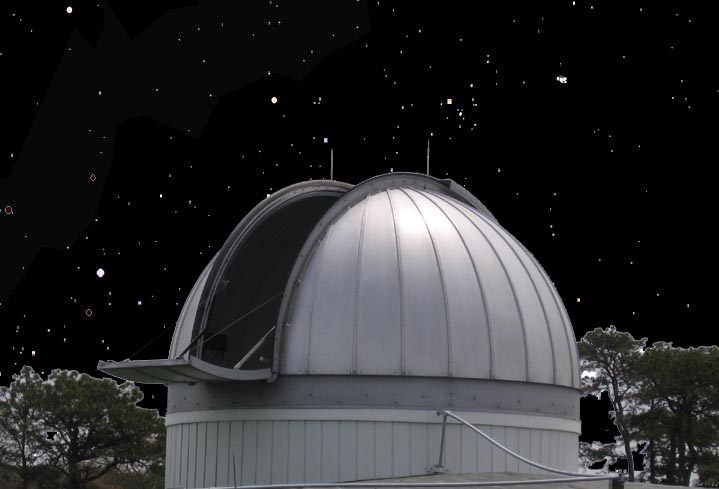
Observatory Director, Mike Hunter, will led a discussion involving several Schmidt Observatory staff on the many new directions and activities that are being taken with our vast inventory of equipment. This makes our telescopes and equipment more valuable to the school and interested viewing public.
September 1st, 2011
Tom Leach 'Lightships of Nantucket Sound'

Harwich Harbormaster, Tom Leach, has done some extensive research on these sentinels that once marked the only safe passage for commercial mariners through nNantucket Sound for 140 years. Find out what lightshipship crews knew about the night skies.
August 4th, 2011,
Ed Ting. 'Making use of a Webcam in Astrophotography, What You May not Know'.
Ed Ting publishes one of the most comprehensive telescope review websites on the internet. Inside, you'll find reviews of over 100 telescopes, eyepiece reviews, a beginner's advice column, feature articles, and lots more! His telescope review website has become a very popular resource for amateur astronomers interested in upgrading equipment and the general novice looking to buy their first scope.
June 2nd, 2011
'PRACTICAL ASTROPHOTOGRAPHY USING DIGITAL SINGLE LENSE REFLEX CAMERAS'

June 2nd
Dr. Michael Hunter is the
Director of the Werner Schmidt Astronomical Obsevatory in South Yarmouth, Massachusetts. Dr. Hunter has an extensive
background in the use of computer driven "go to" telescopes and understands the pitflls and application of DSLR cameras with these units. If you ever considered imaging at this scale you should not miss 'Practical
Astrophotography with Digital Single Lens Reflex Cameras'. Mike Hunter for his informative and
impressive overview of early experiments taking astro
photos with his new Canon EOS Rebel XS 1000D using
either of two telescopes (prime focus) or his versatile Canon
image-stabilized telephoto zoom as lenses. Mike took an
amazingly detailed and sharp (tolerated a lot of zoom on
computer view) photo of a nearly full moon using the big
telephoto lens and traversed his newbie learning curve by
taking most impressive photos of Saturn, the Orion and
Horsehead Nebulas; a spectacular photo of the Andromeda
Galaxy was clearly the most satisfying accomplishment to
date. Mike’s quick success with new equipment inspired
many of us to think seriously about taking up his new
hobby.
On May 5th, 2011, 'MAGNETIC NAVIGATION CUES IN SHARKS'

Dr. Gregory Skomal an accomplished marine biologist, underwater explorer, photographer,
aquarist, and author. He has been a senior fisheries biologist with Massachusetts Marine
Fisheries since 1987 and currently heads up the Massachusetts Shark Research Program (MSRP).
Much of his current research centers on the use of acoustic telemetry, satellite-based technology,
and animal-borne imaging to assess the physiological impacts of capture stress on the post-release
survivorship and behavior of sharks. As of late, Dr. Skomal has headed a team
tagging Great White Sharks outside Chatham Bar in an effort to understand their migratory patterns and behavior.
On April 7th 'EVOLUTION OF LARGE MIRROR TELESCOPE SYSTEMS AT HALEAKALA OBSERVATORY'
Optical engineer, Peter Howes presented a program on 'Work at the Maui Optical Station' a multi-observatory complex situated at the crest of the dormant Haleakala volcano. The observatory stands at an altitude of 10,000 feet. The Air Force Maui Optical Station (AMOS) started life as the ARPA Maui Optical Station. Starting in 1969, the Avco Everett Research Laboratory won the management contract for the observatory and Peter Howes was responsible for this program for over a decade. He will talk about the early days of AMOS when the technologies were developmental and the evolution of large mirror systems from huge monoliths to the early days of compensated imaging. Because of the remarkable clarity, dryness, and stillness of the air, and its location above one-third of Earth’s atmosphere, as well as the limited light pollution, the summit of Haleakala is one of the most sought-after locations in the world for ground-based telescopes.
On March 3rd Bernard Young, obsertvatory staff amateur astronomer and professional land surveyor presented a program on 'Planning and Determining limits for recording Moon Occultation'.
As of late, this has become a primary interest of the Werner Schmidt
Observatory Staff. Discussion included measures to record the Lunar Eclipse of 2010. Mr. Young has an extensive background in Physics from the University of Michigan as an engineer.
On January 6th
MIT scientist and Amateur Astronomer Paul Cezanne gave a presentation on clearing up the confusion in using astronomy software, what's out there, and what works best. An MIT graduate Cezanne is a software analyst by day and is also known for his Astronomy website called 'Paul Cezanne's Obseving Reports' as he says "Sometimes when I'm done looking at the stars, I write about it". He continues to give stargazing talks at Truro Library and the National Seashore and has been an outreach person for Astronomy in general in the Outer Cape.
On December 2nd, Randall Moore, ME told us about the engineering problems of large space telescopes and why we put telescopes in space. Randall Moore a Director of Industrial Relations, Northeastern University College of Engineering
has held many positions in his 40 year career in the Aerospace Industry including Director of Engineering, Senior Aerospace, Sharon, MA;
Principal Systems Engineer, Smithsonian’s Astrophysical Observatory and Chief Mechanical Engineer, Itek Optical Systems, Lexington, MA.
Besides his work directly with Adaptive Optics pother programs that he has directly been involved with include: The Viking Mars Lander;Airborne Reconnaissance Sensors for aircraft and orbiting applications;
the Chandra Orbiting X-Ray Observatory; Hubble and Spitzer telescopes.
On November 4, 2010, Stephan Martin, the author of COSMIC CONVERSATIONS, gave an overview of some of the major events in cosmic history up to
the present, as well as some of the observational evidence for these events. Where did the universe come from?
Where are we going? What happened between the beginning and now? Thought provoking Cosmology questions that generated plenty of thought for a rich discussion. Steve is currently Assistant Professor
of Astronomy at Bristol Community College in Fall River, and his research expertise is in extragalactic studies
of dark matter. "Cosmic Conversations" is a collection of interviews with
scientists, spiritual teachers, indigenous peoples, and cultural “creatives” that explores and expands our
ideas about the nature of the universe and our role in it.
On October 7th, Dr. Jon Greenberg discussed the Search for Extra Terrestrial Intelligence a topic
that holds many questions: Is there intelligent life elsewhere in the universe? Is there intelligent
life on earth? What are the odds of finding intelligent life elsewhere? What is the (in)famous Drake equation?
How is the search being conducted? What would happen if we received an authentic modulated signal from an
extraterrestrial source? Should we answer it? This resulted in a lively thought provoking discussion that
challenged the audience to considering whether the human race will make contact with aliens within a life time.
The problem of connection posed by the Drake equation makes the odds in this matter very slim. However, Drake
considered this could only happen using radio waves which travel near the speed of light. While one member of
CCAS postulated that this contact may come by means that we still do not know or understand. Beam me up Scotty!
September 2nd

On September 2nd, Werner Schmidt Observatory Director Dr. Mike Hunter discussed building and use of inovative personal observatories. The need to fill a niche in setting up and using a small portable telescope on a nightly basis has prompted amateur astronomers to find ways of protecting equipment short of building full on observatory, which may be cost prohibitive, or impossible based on user space needs. Further, local ordinance in certain zones might prohibit them or at the very least require a building permit. There are other factors at work. Mike showed us
the creativity with the growing number of amateur astronomers can be endless and has proven there are many ways to have your telescope at the ready when you need it...
August 5th
OSCILLATIONS IN THE SUN
Many thanks to CCAS president, and CCAS program
chairman Tom Leach for his most instructive
presentation on the structure, physics, and dynamics of
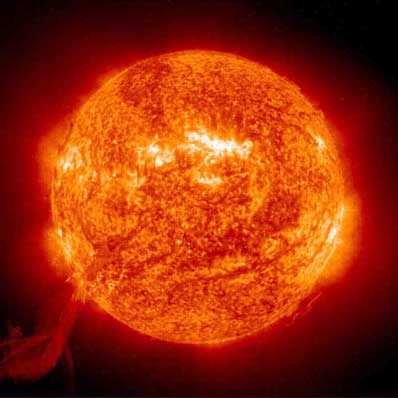
the Sun at our August meeting. Temperature, composition, and motions deep in the Sun influence the oscillation periods and yield insights into conditions in the solar interior. Sunspots form in areas of magnetic activity during the period surrounding solar maximum. In between these activity cycles the sun's surface has very little magnetic activity known as solar minimum. Tom explained the kinds
of observations and measurements we can make on the
Sun, how that data informs us about structure and
phenomena deep in our star, and reviewed some of the
effects of Sun phenomena on us here on Earth. An
especially effective presentation was made possible by
Tom’s interweaving images and videos from the web,
each of which addressed a given topic or phenomenon.
Especially amusing was his clip from an old 50’s
educational TV show clip, called “Our Mr Sun.” which can be viewed from the CCAS website. See movies link.
July 1st
PLANET-EATING STARS AND STYROFOAM WORLDS: An update on the search
for Extrasolar Planets
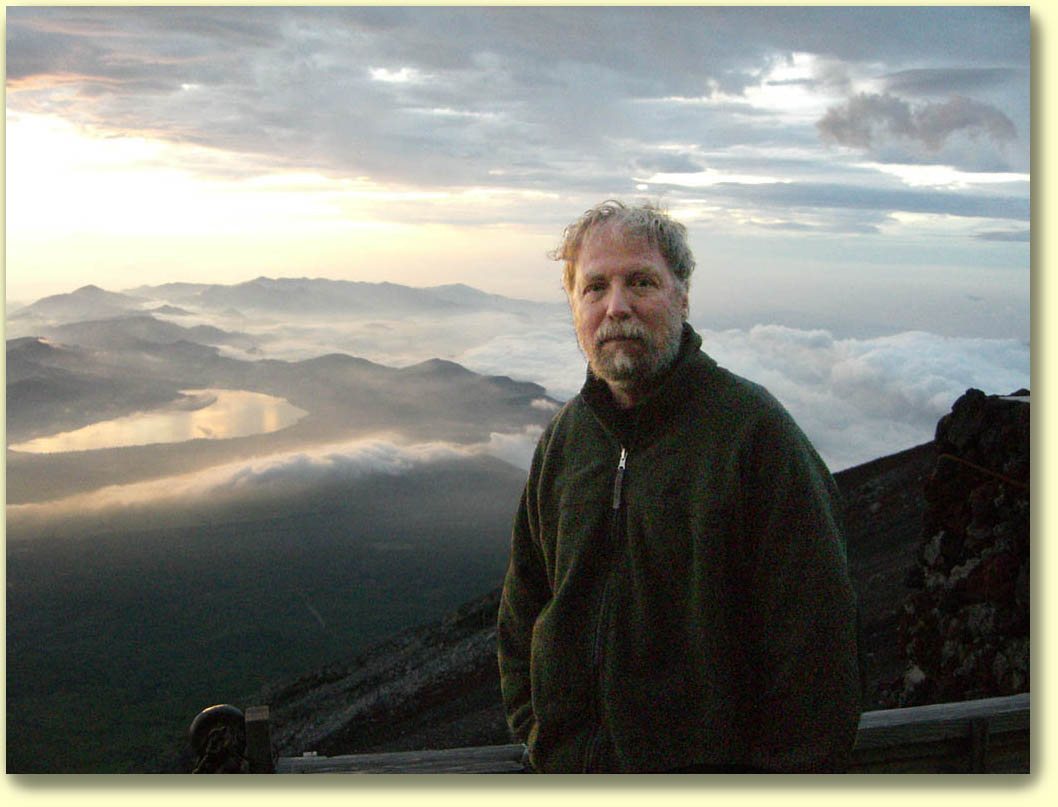
On July 1st, Dr. Laurence Marschall the author of two new books on astronomy "GALILEO'S NEW UNIVERSE" and "PLUTO CONFIDENTIAL". Until 1995, we knew of no solar systems like our own in the universe.
Yet in the past few years over 400 planets have been discovered orbiting
stars other than our Sun. This sudden flood of
discoveries came about, explore some of the odd new worlds that have
been studied so far, and review what we have learned about the structure
and history of our own planetary system from observing these far more
distant planets.
June 3rd
STUDYING VARIABLE STARS
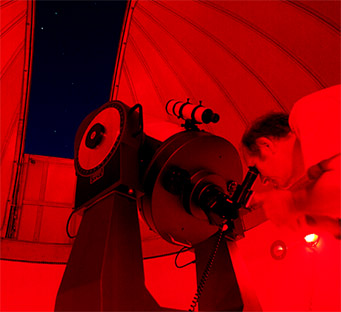
On June 3rd, AAVSO member James Carlson presented on studying variable stars. Carlson served as CCAS Observatory director since its inception until 2007.The American Association of Variable Star Observers (AAVSO) provides data for basic research. Individuals are assigned personal observing codes and make daily, even hourly, reports regarding the activity of stars as they brighten and fade.
May 6th
NASA CHALLENGES
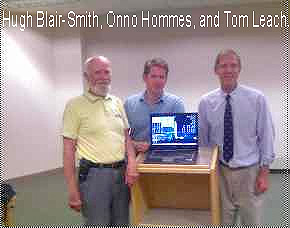
On May 6th, 2001
MIT grad Hugh Blair-Smith followed-uphis spell binding talk last August reviewing his
remarkable career in “machine language” level software
building in support of several historic NASA programs and
programming for the inertial guidance system for the Apollo
spacecraft, which landed the world’s first man on the moon.
Hugh returned and built on the machine-level programming he did for NASA and gave us an update on what he sees for the future of the NASA Apollo, ISS and Space Shuttle program under Obama influence.
April 1st, 2010
MIT's Dr. Marcia Bartusiak gave her talk on founders of astronomy that was the adapted from her latest book "The Day We Found the Universe'.
Bartusiak's storyline showed how many important astronomers were all so close to discovering the theory of expansion of the Universe before personal setback or change in their career prevented them from this achievement. She talked about the critical work of Vito Slipher who rebuilt and mastered the delicate Lowell Observatory spectrograph under Edwin Hubble. Hubble usually gets credit, but Siphler was first to see the signs that the universe is expanding.
March 4th, 2010
On March 4th, Amateur Astronomer Paul Cezanne gave a presentation on conducting a proper Messier Marathon. An MIT graduate Cezanne is a software analyst by day and is also known for his Astronomy website called 'Paul Cezanne's Obseving Reports' as he says "Sometimes when I'm done looking at the stars, I write about it". He continues to give stargazing talks at Truro Libray and the National Seashore and has been an outreach person for Astronomy in general in the Outer Cape.
Sturgis Charter school student Kelsie Krafton also spoke on her acomplishment finding two asteroids which will eventually bare her name. CCAS awarded her for the accomplishemnt.
February 4th, 2010
On February 4th, Astronomer Ed Ting gave a powerpoint lecture “Talking about Telescopes”. Ed publishes one of the most comprehensive telescope review websites on the internet. Inside, you'll find reviews of over 100 telescopes, eyepiece reviews, a beginner's advice column, feature articles, and lots more! His telescope review website has become a very popular resource for amateur astronomers interested in upgrading equipment and the general novice looking to buy their first scope.
January 7th, 2010, Michael Renzi gave an incredible talk on
"Reflections of an Aspiring Astronomer". A former CCAs member,
Mr. Renzi resides in Lakeville, Mass where he operates a roll-off
observatory under dark skies. He has built and maintained many
telescopes. His imaging equipment is currently attcahed to a
Schmidt Cassegrain scope and uses a Losmandy Titan mount.
December 3rd,2009, Dr. Alburt Rosenberg, PhD talked about Atmospheric Optical Effects. Rainbows, mirages, auroras, the twinkling of stars, and even the blue color of the sky are all considered atmospheric optical effects. These visual events in the sky occur when light bounces off or is bent by solid particles, liquids droplets, and other materials present in the atmosphere.
Over his years as a college professor Dr. Rosenburg, taught concepts and theories in physical science at RPI, Penn, and UMASS.
November 5th, 2009 Ryan Mann talked about Dendrochronology, the study of annual growth rings in trees. Much like ice
cores, carbon 14 dating and sediment cores, the layering system can unlock clues
into what is going on and what has happened in the past in relation to
environmental conditions. During the winter 2008, Mann performed analysis on several
core samples in an attempt to correlate weather patterns in relation to annual
rings in cedar trees found in Waquoit bay.
October 2009, Robert Brookhart talked about aspects of missile tower development during the space race in the 1960's. As a structural
steel detailer he worked in California on plans and drawings that became the Apollo moonshot tower(s) at Cape Canaveral including requisite escape plans for the astronaut safety. His work in steel design also got him envolved in the Atlas missile silo program.
September 2009, Gary Derman talked about
Einstein's telescope and its use in the search for the Dark Matter and Dark Energy
that occupies 95% of the universe. Discarded as not practical by Einstein when he
first suggested it, the phenomenon has already been used to find new planets and to
see objects too distant for even the Hubble telescope alone. Amateurs and
professionals alike will use it for the new astronomy of the 21st century.
August 2009, Amateur Astronomer Betsy Young gave her presentation on Astronomer Maria Mitchell journey from Nantucket to first Director of Vassar College Observatory. At the age of 29 she discovered a comet from the rooftop of her home on
Nantucket (1847). Mitchell was against slavery a suffragist and co-founded the American Association for the Advancement of Women.
July 2009, Hugh Blair-Smith gave us a resopunding interesting talk on his experiences working with NASA on Apollo, the Space Shuttle, and the current Lunar Reconnaissance Orbiter. His specialty was the embedded computers required for inertial navigation and other functions. We look forward to Hugh's return this winter to give us more on strategies at NASA and how
Apollo astronauts were trained in celestial navigation, but that role was later de-emphasized.
June 2009, Tom and Jackie Leach fresh back from their visit to the Franklin Institute spoke on the exhibit "Galileo, the Medici and the Age of Astronomy" which showcases Galileo's accomplishments, his relationship to the ruling Medici family, his discoveries, and his overall impact on astronomy, physics, and math. This exhibit was put together in celebration of the 400th year anniversary of his contributions to the progressive development of the telescope and will continue through October in Philadelphia only.
May 2009, Dr. Tim Barkers’ topic was “Visual Astrophysics” which provided the attendees with important insights on what information can be gathered about “planetary nebulae” using observation techniques available to amateur astronomers. He was careful to point out that the term planetary nebulae does not refer to planetary systems but, to dying stars which are giving off their outer structure in the form of luminous gases that can appear as bright planets. He opened his discussion with a brief review of his own introduction to astronomy and an overview of the astrophysics program at Wheaton College. He covered his graduate studies at the Lick Observatory and its 36 inch refractor telescope. Include were comments on his personal friendship with fellow astronomer, Steven Hawley, who went on to become a mission specialists on five space shuttle flights.
Dr. Barker used the Ring Nebula (M57, NCG 6720) as the focus of his explanation of the massive gasses thrown off by stars in a death cycle and how this gas is illuminated by the star. He demonstrated how filters are used to determine the various chemicals making up the gas and also how filters can be used to reduce background light. Dr. Barker highlighted the role of solar mass in life cycle of stars, especially their end state.
Members engaged with lively questions and comments regarding their own observing experiences with nebulae.
April 2009, Bill Boyd recreated important history with slides and models, presenting our tale of the birth of the Cape Cod Astronomical Society and the Werner Schmidt Observatory from being a gleam in someone's eye to the dedication ceremony at the Dennis-Yarmouth Regional High
School. The sooner we get this archived by Bill the better. Thanks Bill!
March 2009, Dr. Michael Hunter, Observatory Director returned to speak on telescope
maintenance. As telescopes become more accurate,
powerful, and complex, they become more vulnerable and more in need of proper maintenance. Observatory Director Mike Hunter
brought us up to speed on scope maintenance and
alignment of even the smallest Dobsonian to a permanently mount, computer controled scope. Not to be taken lightly, maintenance is one of the single, most important things that can be done by
the amateur astronomer to optimize viewing pleasure.
February 2009, Dr. Michael Hunter spoke on the construction/modification of telescopes. From the smallest 3" telescope he made in 1957 to a microobservatory for an 8” schmidt-newtonian and beyond. This was the first of two part series that Hunter guides us through on the construction and maintenance of telescopes.
January 2009, Dr. John Huth spoke on Primitive Navigation. Some examples of primitive navigation include the Vikings and Polynesians. Because the latitudes of voyaging for these cultures differed substantially, their means of navigation had corresponding differences. For example: the Polynesians created a "sideral compass" that takes advantage of the fact that stars always rise and set at the same azimuth over the course of the year. The Vikings, on the other hand, could voyage during the summer months and were much more reliant on the sun, which introduces its own set of issues for navigation. It is said that the Vikings used a "sunstone" to find direction from the polarization of the sky. He described a number of techniques used by cultures for navigation prior to the now common practices of the use of the sextant or GPS. Dr. Huth is a Donner Professor of Science and teaches in the Faculty of Arts and Sciences at Harvard University.
December 2008, attorney and historian Mike Farber spoke about how the Pilgrims used a sophisticated blend of surveying techniques to subdivide our lands. They used science, sometimes astronomical clues, to delineate the boundaries of Cape Cod. The ongoing Cornerstone Project is drawing interest from local historians and archaeologists. CCAS members may want to join Farber on his fact finding mission and we have published an addition to our website to keep up to date on this interesting topic. CCMNH will have a public discussion on the Cornerstones on December 13th and CCAS vice president Tom Leach has been invited onto the panel.
November 2008, avid astronomer Paul Cezanne spoke on the fine points of Binocular Astronomy. If you missed the talk He has been keeping a regular tally of his nightly outings in his Astonomy Blog
Paul Cezanne's Astronomy Observing Reports.
October 2008, Gary Derman spoke on Sky Pointing. Gary described the logic (without the math) of how the celestial object positions are calculated for your location and time and explained the distortions and position errors associated with this process. More simply stated, to see an object where should we point the telescope and then how far off center might the image appear.
September 2008, Richard Porter gave his talk on the development and use of the thermometer from Galileo to the Space Shuttle. Dr. Porter is owner operator of the Thermometer Museum in Onset, Massachusetts and recently donated one-half of his collection to Penn State University.
The August meeting showed us how to use star positions to find our location on earth.
July 2008, Robert Walsh of Massachusetts Maritime Academy gave an animated talk at the August meeting on celestial navigation and the use of a sextant to determine ships position. Commander Walsh is Director of the Center for Maritime Training at the Academy. Many thanks to MMA for providing us with such a positive and interesting speaker on this complex topic.

